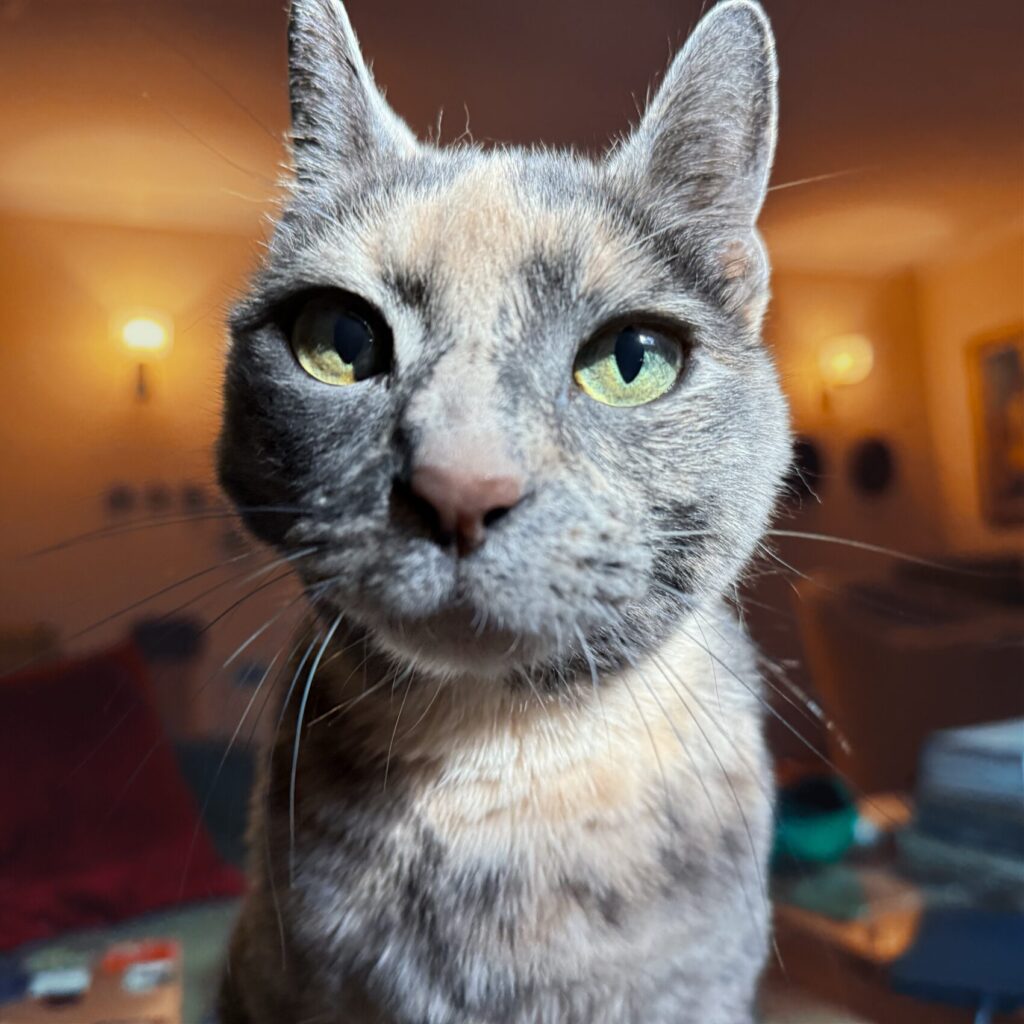
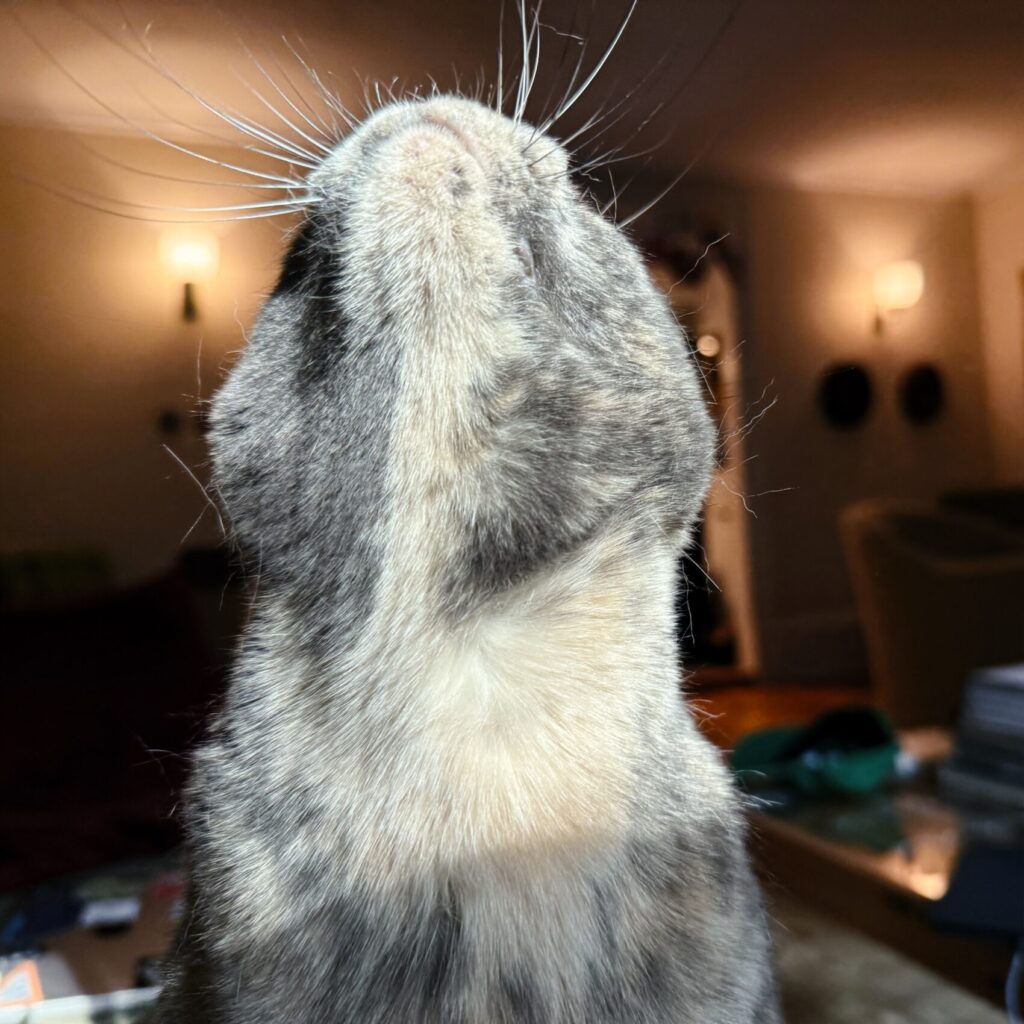
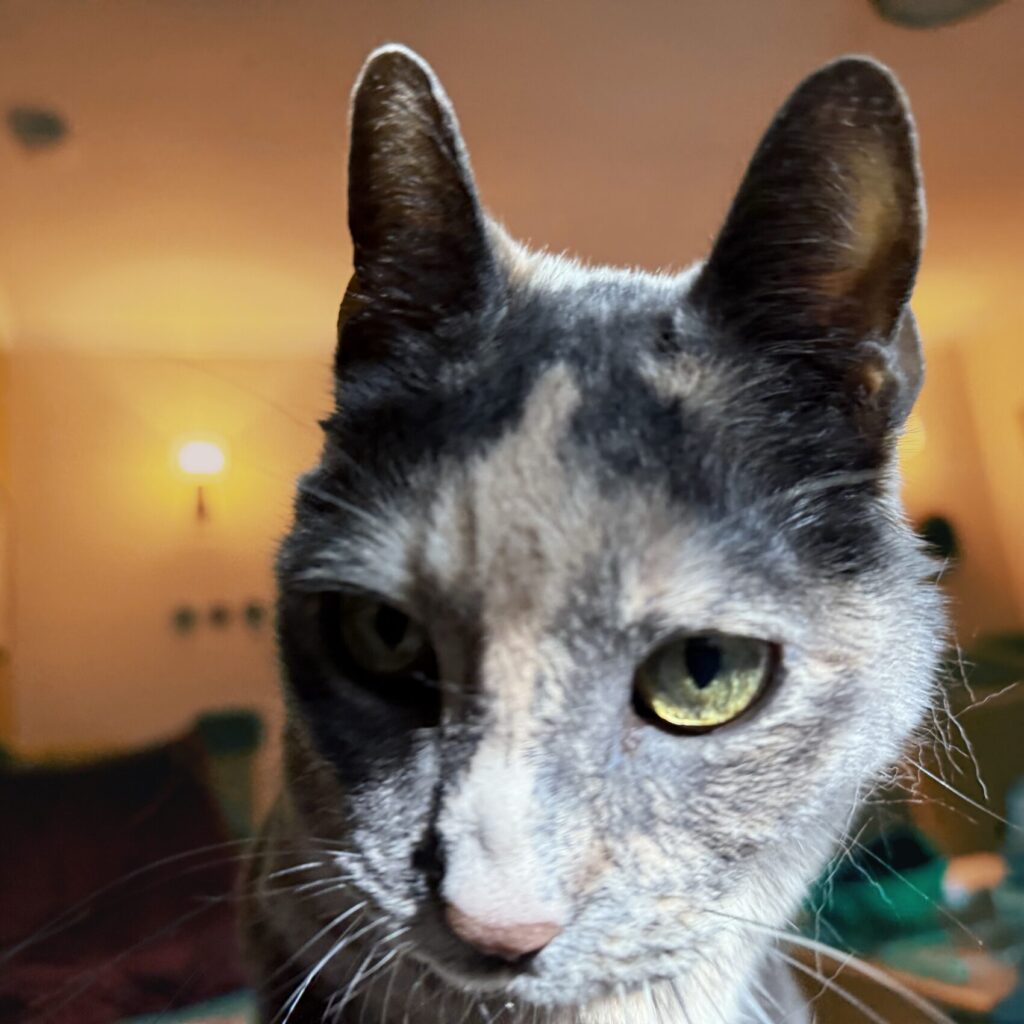
Even though she’s still a little feral, Lucy’s enjoyed her time in the spotlight when she became the last cat left standing. We’ve since fostered – and adopted – another needy older sibling for her, but she’s held her own since and continues to rule the house. I managed to catch her in some unusual sunlight.
Photographer Malick Sidibe captured the cultural excitement that its young generations experienced as Mali transitioned from colonial rule to independence in the first photo, Christmas Eve, Happy Club. It’s the end of the night from the looks of the empties strewn around and one or two tired-looking observers, but the dancing couple, her in bare feet symbolizing relaxation and joy, both shyly avoiding eye contact yet dancing perfectly synchronized, look like they’re just getting started.
The version of Matisse’s The Dance in MOMA’s collection was actually a compositional study for a pair of paintings (the other being Music) commissioned by Sergei Shchukin, one of his patrons. The light strokes, bright color, and carefree feel of the study make it a superior work compared to the final piece.
Slow Swirl at the Edge of the Sea is, according to his son Christopher, Mark Rothko’s love letter to his wife Mel, whom he’d just met when he painted it. Our educator suggested that he was influenced by Matisse’s removing, repainting, or overpainting elements in The Red Studio (1911) while others quote Rothko as saying that it influenced his color field series. Rothko created this vibrant yet delicate surrealist portrait of the couple; while it’s not clear the couple are dancing, there’s enough action lightly rendered to make comparisons to the other works valid.
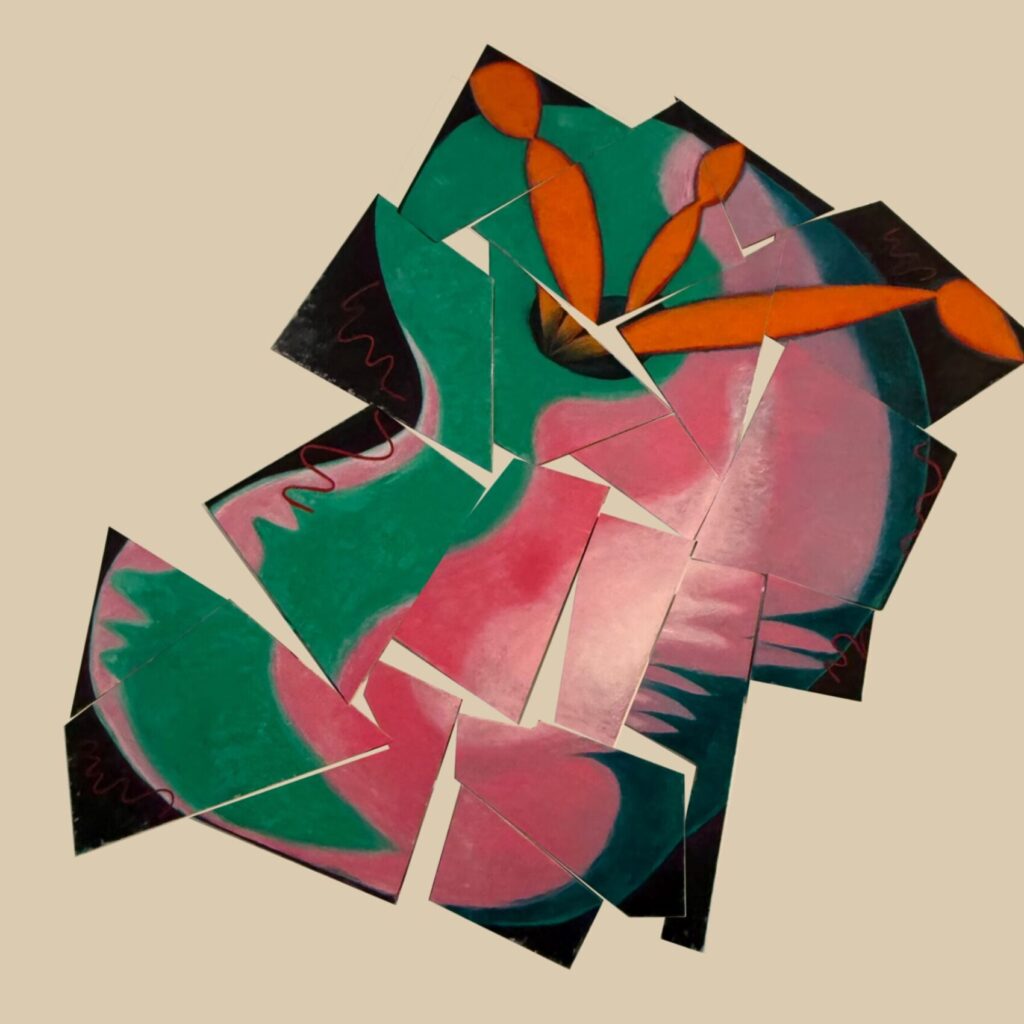
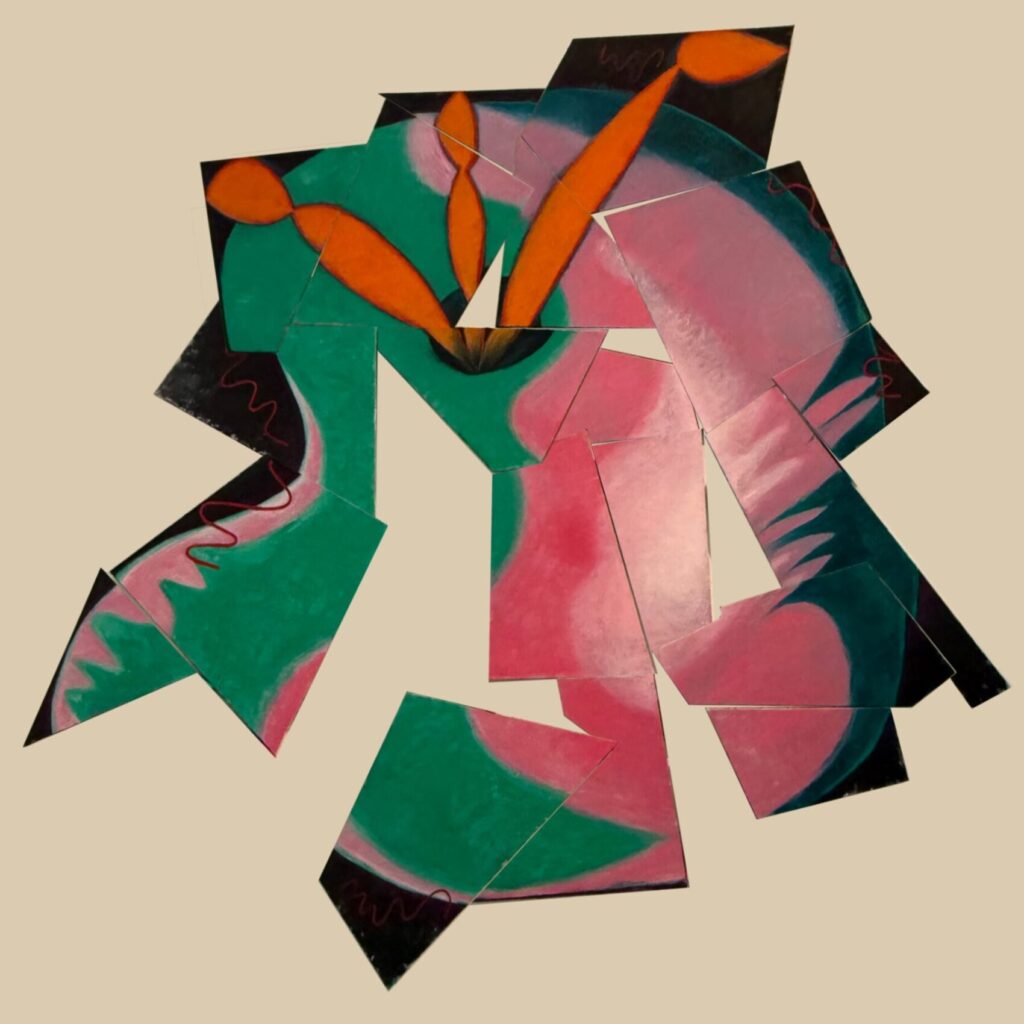
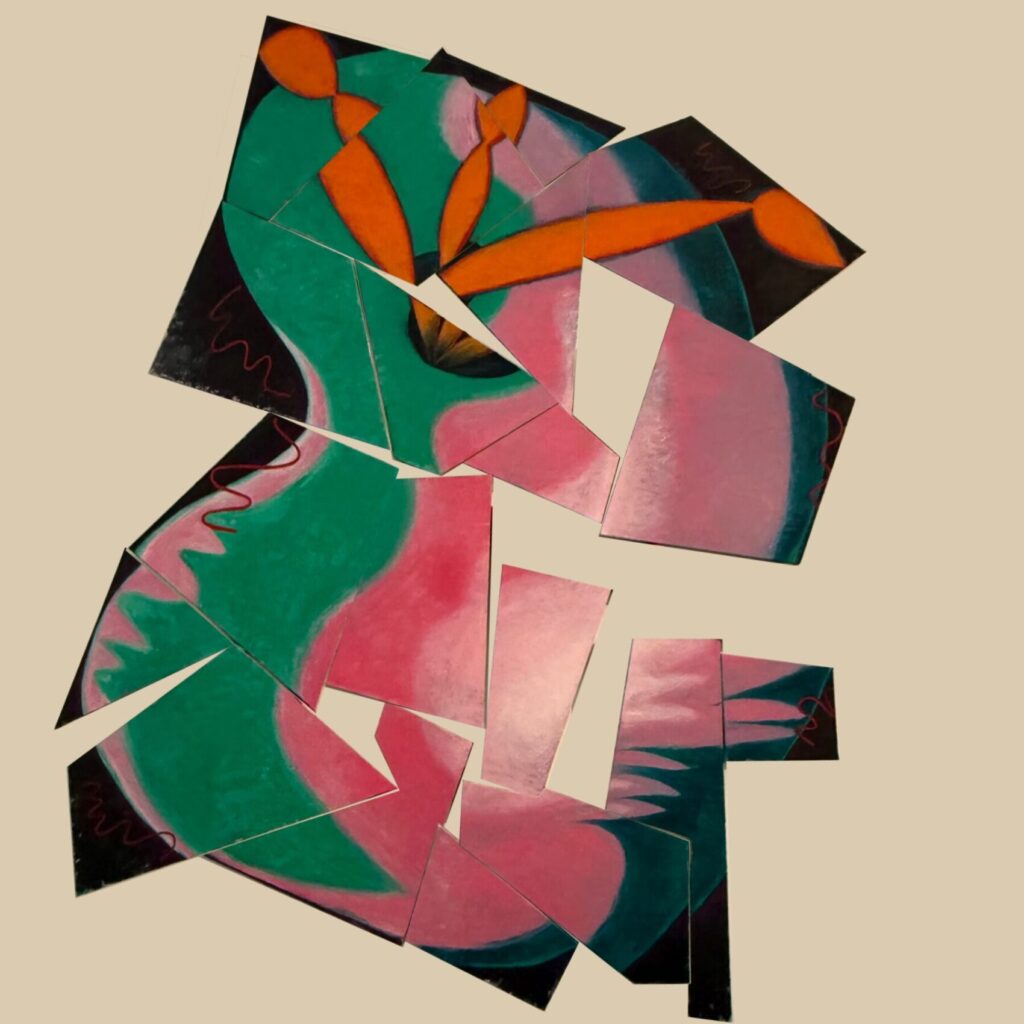
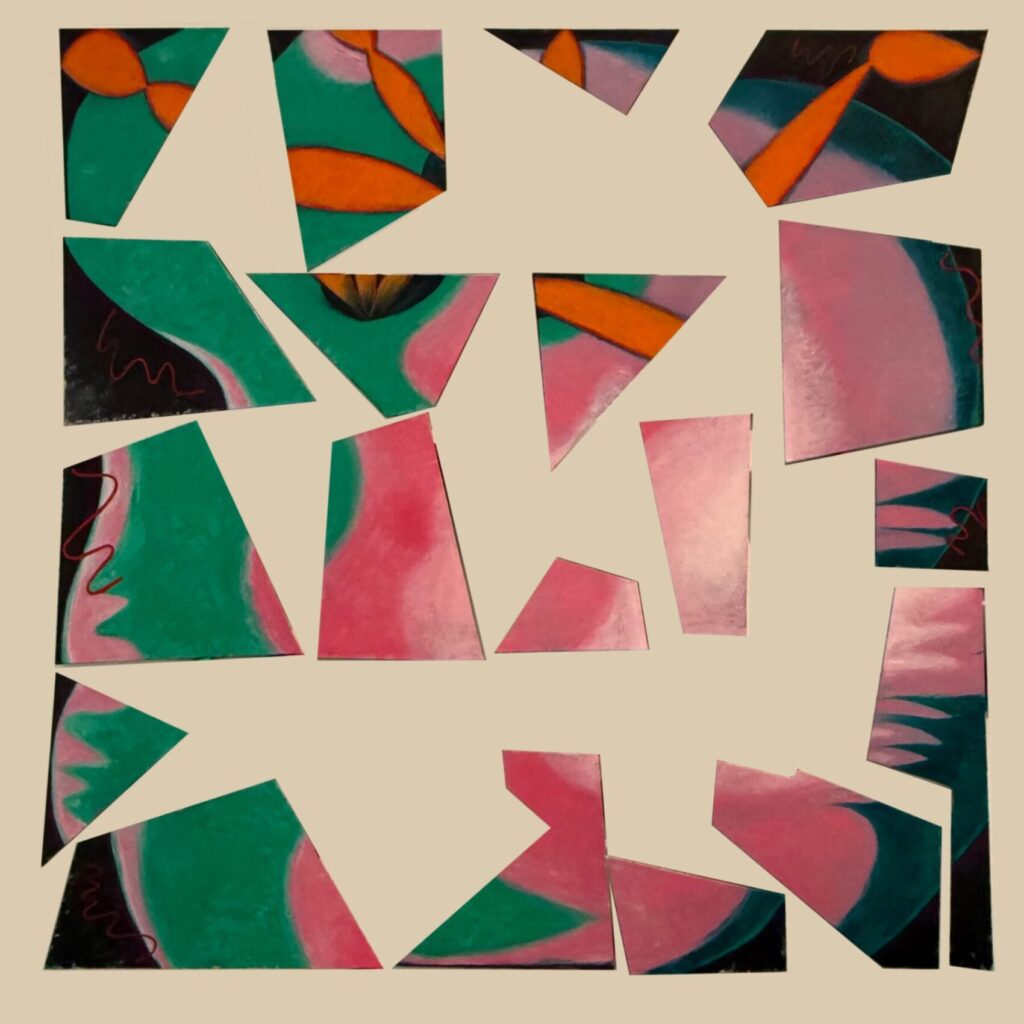
Great New York CIty artist Elizabeth Murray created “Painters Progress” using 19 separate canvases. When she started working on the piece, she didn’t have an image in mind; one day she was walking her dog down Canal Street and saw a neon sign in an art supply store of a palette with three brushes. Murray felt like it was the most obvious thing in the world when she saw it.
Murray said that she felt shattered at that time, and had a connection to the process of shattering the canvas and making it whole again, not necessarily the same one that originally existed, but a new whole.
I thought it would be interesting to rearrange its components and, in doing, experience the piece in new, interesting ways. Here’s the original followed by my variations.
I found this relic while going through a clothes bin. This was given to me by someone in NYC NeXT sales, pre-NeXTstep 1.0. Not sure if BMW was actually a customer (although most big companies had at least one) but I expect that it was more to associate NeXT computers with brands that Steve respected.
From a Village Voice article by #JessMcHugh about this #EastVillage #NYC building: “The flamboyant colors, which [Antonio “Tony”] Echeverri still mixes by hand when he has the facade of 246 East 4th Street repainted every five years, aren’t the only details that set his beloved building apart. From sculpted angels peeking off the upper-story windows to an ornate door complete with marbled molding, the building reveals more the longer you look at it. Passing through the archway of the front door, stamped pelicans and fish dot the staircase leading up to the apartments, inspired by a dream he once had.”